


Yes. Supreme Cableguard DWC HDPE cable duct pipes are suitable for both telecom and power cable applications. Their smooth inner surface allows easy cable pulling for both cable types, and their crush resistance and moisture protection meet the requirements of power distribution and telecom network infrastructure equally.

Conduit Pipe for Electrical Wiring
Supreme offers a comprehensive range of cable protection solutions designed to ensure safe, durable, and efficient electrical and telecommunication cable management. Our portfolio includes PVC electrical conduit pipes, conduit pipes for electrical wiring, and HDPE cable duct pipes, meeting both domestic and international quality standards. Engineered for strength, chemical resistance, and long service life, our products cater to residential, commercial, industrial, and infrastructure projects.
As one of the trusted HDPE duct pipe manufacturers in India, Supreme provides innovative and reliable products that safeguard cables against mechanical damage, moisture, and environmental stress. Whether it’s PVC electrical wire pipes for indoor applications or cable PVC pipes for large-scale installations, our cable protection systems are preferred by engineers, contractors, and utility providers worldwide.

FILTER
FILTER
×
Category
What is the Difference Between an Electrical Conduit Pipe and a Cable Duct Pipe?
Both protect cables, but they serve different environments and applications. An electrical conduit pipe is used for surface-mounted or concealed wiring within buildings, protecting electrical cables from mechanical damage, moisture, and contact. A cable duct pipe is designed for underground installation, protecting power, telecom, broadband, and CCTV cables from soil pressure, ground movement, moisture ingress, and rodent damage. Supreme's cable protection range covers both through Cableshield PVC conduit pipe for electrical wiring and Cableguard DWC hdpe cable duct pipes, giving contractors and utility providers a complete cable protection answer across above-ground and underground applications.
Which Electrical Conduit Pipe is Right for My Building?
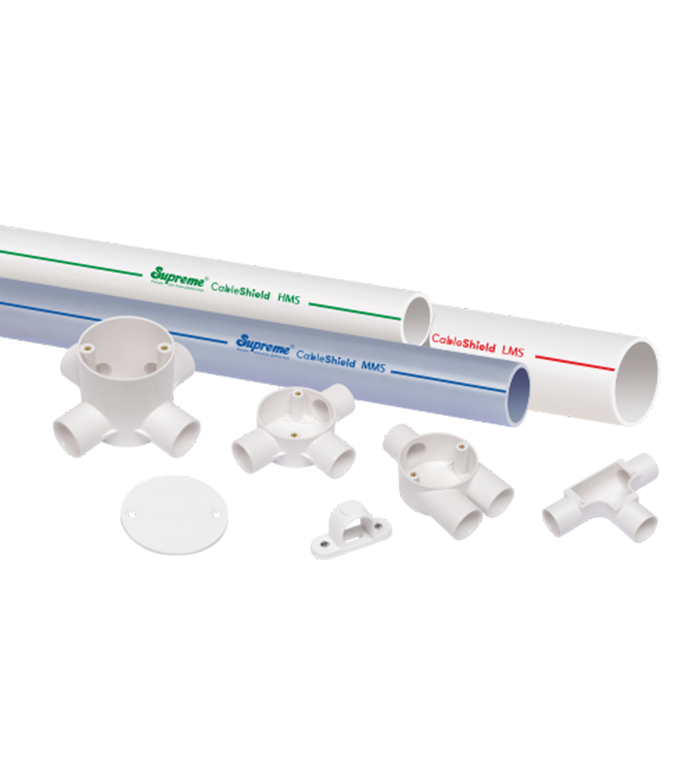
Supreme Cableshield pvc electrical conduit pipe is manufactured from high-quality uPVC compound conforming to IS:9537 Part 3, available in 20mm to 50mm sizes across three duty classes: LMS (Light Medium Stiff), MMS (Medium Medium Stiff), and HMS (Heavy Medium Stiff). The duty class determines wall thickness and mechanical strength, allowing the correct specification for surface wiring, concealed wall installation, or more demanding structural environments. Cableshield conduits are flame retardant and self-extinguishing — a critical safety property that prevents fire from propagating through the wiring conduit in the event of an electrical fault. The pipes are non-conductive, preventing current leakage to the conduit body. They are available in Texla White and Ivory colours and come with a complete range of compatible fittings. To understand why PVC conduit pipes are the preferred choice for residential and commercial electrical wiring, read our guide on why PVC conduit pipes are ideal for electrical wiring.
Also Read: Why PVC conduit pipes are ideal for electrical wiring
When Should I Use HDPE Cable Duct Pipes Instead of PVC Conduit?
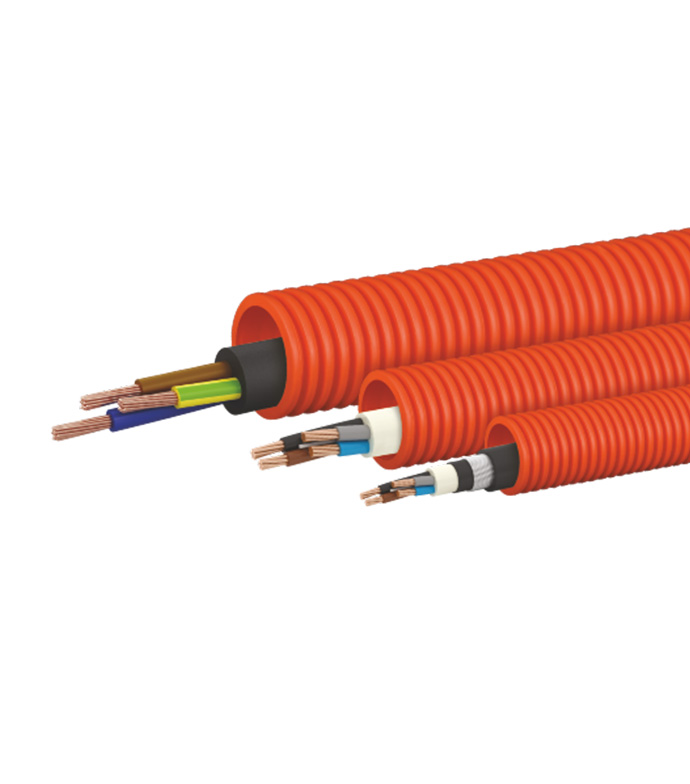
Underground cable networks require a pipe that can withstand burial loads, ground movement, moisture ingress, and physical threats including rodent attack. Supreme Cableguard DWC hdpe cable duct pipes are manufactured as per IS:16025 Part 24 in Type 450N, available from 40mm to 120mm. The double wall construction — smooth inner surface for easy cable pulling, corrugated outer wall for crush resistance — provides the structural performance required for buried installations. Cableguard is anti-rodent, carries no flame propagating properties, and is watertight and moisture proof, making it the correct specification for underground power distribution networks, telecom and broadband infrastructure, CCTV cable networks, railways, airports, street lighting, highways, flyovers, and tunnels. As one of the established hdpe duct pipe manufacturers in India, Supreme manufactures Cableguard to the exacting standards that infrastructure-grade underground cable protection demands.
Why Choose Supreme for Cable Protection Pipes?
Supreme's electrical conduit pipe range covers IS:9537 Part 3 certified Cableshield in LMS, MMS, and HMS duty classes, and IS:16025 Part 24 certified Cableguard pvc electrical conduit pipe and HDPE duct pipes for underground infrastructure. Both products are manufactured from virgin uPVC compound, flame retardant, non-conductive, and built for long service life with minimal maintenance. For electrical contractors, construction companies, telecom utilities, and infrastructure project specifiers looking for verified, standard-compliant cable protection from a single hdpe duct pipe manufacturers source, Supreme delivers across both above-ground and underground requirements.
Frequently asked questions
Which conduit pipe is most fire resistant for electrical wiring?
Supreme Cableshield uPVC electrical conduit pipes are flame retardant and self-extinguishing as per IS:9537 Part 3. They do not propagate flame, which means in the event of a fault, fire does not travel through the conduit system, limiting damage and improving building safety.
Are HDPE duct pipes suitable for underground cable laying?
Yes. Supreme Cableguard DWC HDPE cable duct pipes are specifically designed for underground installation. Conforming to IS:16025 Part 24 in Type 450N, they offer crush resistance, anti-rodent protection, watertight joints, and moisture-proof construction, making them suitable for power, telecom, broadband, and CCTV cable networks.
Which conduit is best for high voltage cable protection?
Supreme Cableguard DWC HDPE cable duct pipes in HMS class with Type 450N rating are suitable for high voltage underground cable protection due to their crush resistance, non-conductive properties, and moisture-proof construction. For above-ground high voltage conduit, HMS class Cableshield uPVC conduit provides the required mechanical strength.
What is the difference between a rigid and flexible conduit pipe?
Rigid conduit pipes like Cableshield uPVC are used for straight runs in walls and ceilings where firm, fixed protection is needed. Flexible conduit pipes are used where bending around obstacles or vibration absorption is required. Supreme Cableguard HDPE duct pipes offer flexibility for underground directional boring and curved installation routes.
What is the difference between PVC and HDPE conduit pipes?
PVC conduit pipes are rigid, used for above-ground surface and concealed wiring within buildings. HDPE cable duct pipes are flexible, designed for underground burial where crush resistance, ground movement tolerance, anti-rodent properties, and moisture protection are required. Supreme offers Cableshield for PVC and Cableguard for HDPE applications.
How do I choose the right conduit size for electrical wiring?
Conduit size depends on the number and diameter of cables to be housed. Supreme Cableshield is available from 20mm to 50mm in LMS, MMS, and HMS duty classes. LMS suits lighter residential wiring; HMS suits heavier mechanical load environments. The conduit internal diameter should allow cables to be pulled through without excessive friction.
What is a conduit pipe used for in construction?
A conduit pipe protects electrical cables from mechanical damage, moisture, chemical exposure, and contact within walls, ceilings, floors, and underground routes. In construction, it organizes wiring into defined pathways and allows cable replacement without breaking walls.
Which conduit pipe is best for outdoor electrical wiring?
Supreme Cableshield uPVC conduit pipes are UV stabilized and weather resistant, making them suitable for outdoor surface wiring. For underground outdoor runs, Supreme Cableguard HDPE cable duct pipes provide additional crush resistance and moisture protection required for buried outdoor cable routes.
What is a cable duct pipe used for in telecom networks?
Cable duct pipes create underground conduits for routing telecom, broadband, and optical fibre cables safely beneath roads, footpaths, and built-up areas. Supreme Cableguard HDPE cable duct pipes are used for telecom networks, power distribution, railways, airports, street lighting, highways, and CCTV infrastructure.
Which conduit pipe is best for electrical wiring at home?
Supreme Cableshield uPVC electrical conduit pipes conforming to IS:9537 Part 3 are the standard choice for home wiring. Available in LMS, MMS, and HMS duty classes from 20mm to 50mm, they are flame retardant, self-extinguishing, non-conductive, and suitable for both concealed and surface wiring installations.